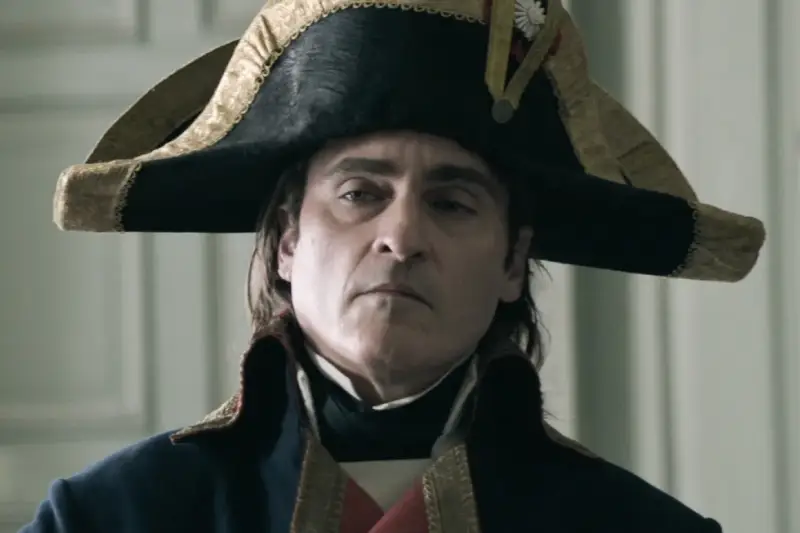
Napoleon (2023) – Historical Truth or Ridley Scott’s Epic Fantasy?
Movies
Joaquin Phoenix is Napoleon Bonaparte. Vanessa Kirby is Joséphine. Ridley Scott delivers one of the most spectacular – and most controversial – historical epics of our time: from the chaos of the French Revolution to the coronation, the battlefields, and final exile. But how much of it actually happened?
Table of Contents
Plot Summary
Ridley Scott’s Napoleon is a sweeping historical epic that centres on two things: the military genius (and limitless ambition) of Napoleon Bonaparte, and his obsessive, passionate, often toxic relationship with Joséphine. Here’s how the story unfolds:
- 1789–1793: The bloody French Revolution and the rise of a young Corsican artillery officer
- 1793 Siege of Toulon – the victory that makes Napoleon a general at age 24
- Meeting and marrying Joséphine de Beauharnais in 1796
- The Egypt Campaign (1798-1799) – including the infamous (and completely fictional) pyramid cannon scene
- 18 Brumaire Coup (1799) – Napoleon seizes power and becomes First Consul
- 1804 – He crowns himself Emperor in Notre-Dame
- The great battles: Austerlitz (1805), Borodino (1812), Leipzig (1813), and finally Waterloo (1815)
- First exile to Elba, the Hundred Days return, final defeat, and exile to Saint Helena
- Death in 1821 at age 51
The film presents Napoleon as both one of history’s greatest military minds and a man ultimately destroyed by his own ego and his obsession with Joséphine. Scott delivers jaw-dropping battle sequences (Austerlitz and Waterloo are pure spectacle) while making the Napoleon–Joséphine relationship the emotional spine of the entire movie.
In short: the meteoric rise from revolutionary soldier to Emperor of the French… and the equally spectacular fall – all driven by genius, ambition, and one unforgettable woman.
Real People vs Actors – Side-by-Side Comparison
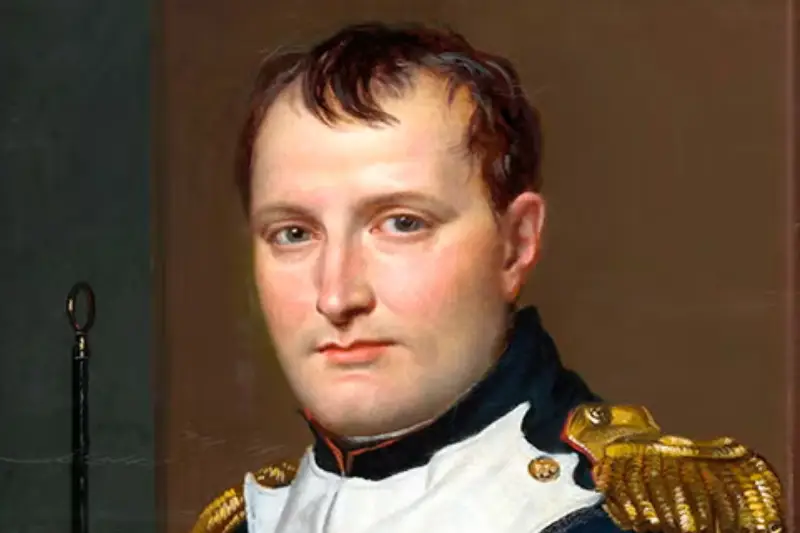
Napoleon Bonaparte
Real Person (1769–1821)
Military genius, Corsican artillery officer turned Emperor of the French (1804–1815).
Conquered most of Europe, won legendary victories like Austerlitz, created the Napoleonic Code.
Exiled twice (Elba & Saint Helena) and died at 51.
One of history’s greatest – and most controversial – leaders.
Joaquin Phoenix
Actor (Napoleon Bonaparte)
Plays Napoleon in Ridley Scott’s 2023 epic.
A brilliant strategist who is also insecure, emotionally unstable, and completely obsessed with Joséphine.
Carries the entire film – from battlefield glory to bedroom tantrums – with raw intensity.
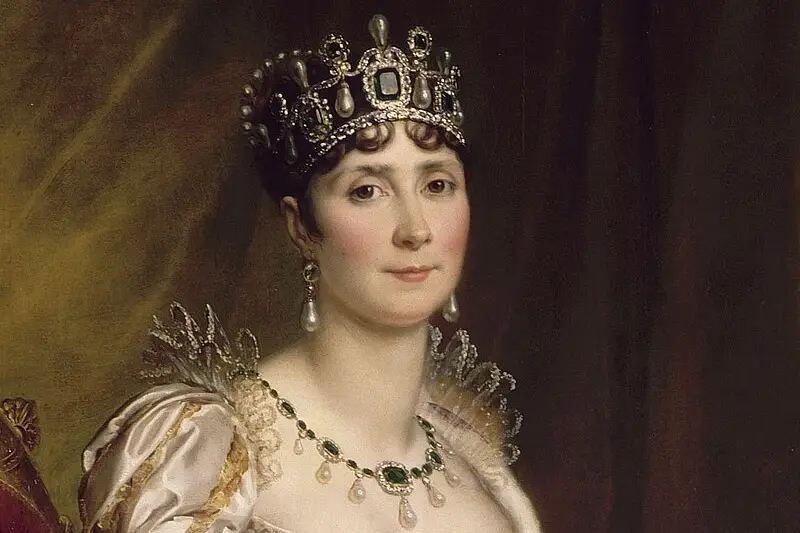
Joséphine de Beauharnais
Real Person (1763–1814)
Napoleon’s first wife and Empress of the French (1804–1810).
Six years older, a widow with two children when they met.
Unable to give him an heir → divorce in 1810, but remained the love of his life until his dying breath.
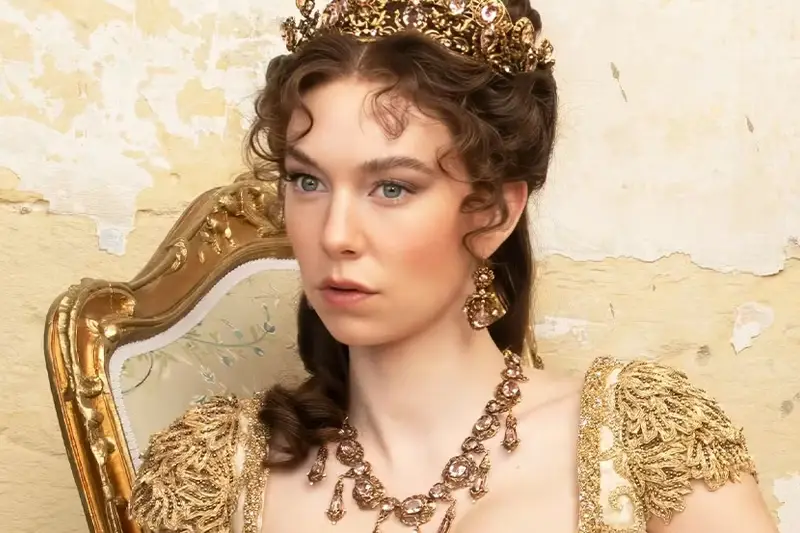
Vanessa Kirby
Actress (Joséphine de Beauharnais)
Steals every scene as the elegant, witty, sexually powerful empress.
The bedroom scenes and the divorce sequence are pure acting masterclasses.
Many say she’s the real heart of the movie.
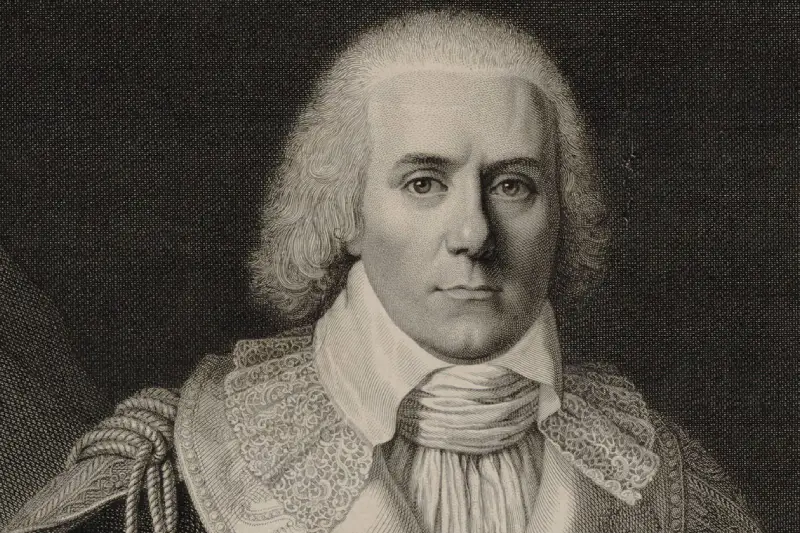
Paul Barras
Real Person (1755–1829)
One of the most powerful men of the French Revolution.
Leader of the Directory, Joséphine’s former lover and protector.
First supported Napoleon, then lost power after the 18 Brumaire coup.
Famous for his wealth, corruption, and wild parties.
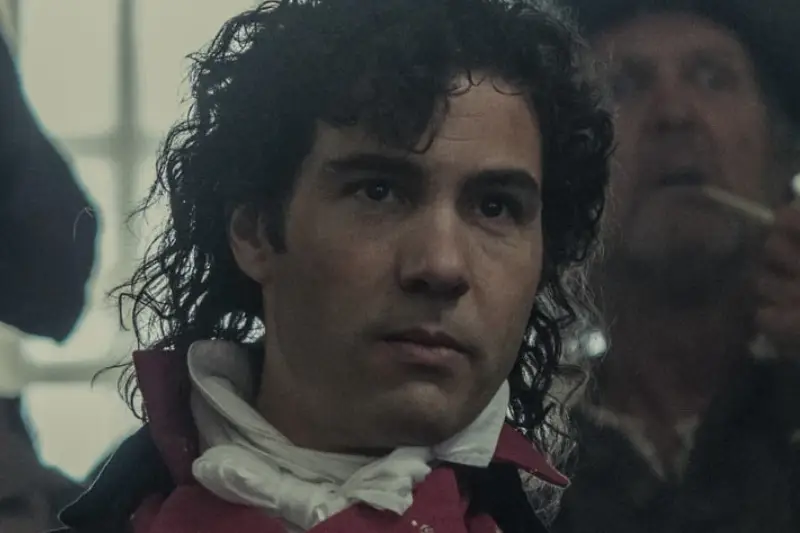
Tahar Rahim
Actor (Paul Barras)
Perfectly captures the cold, cynical, manipulative politician.
The scene where he essentially “hands Joséphine over” to Napoleon is chilling.
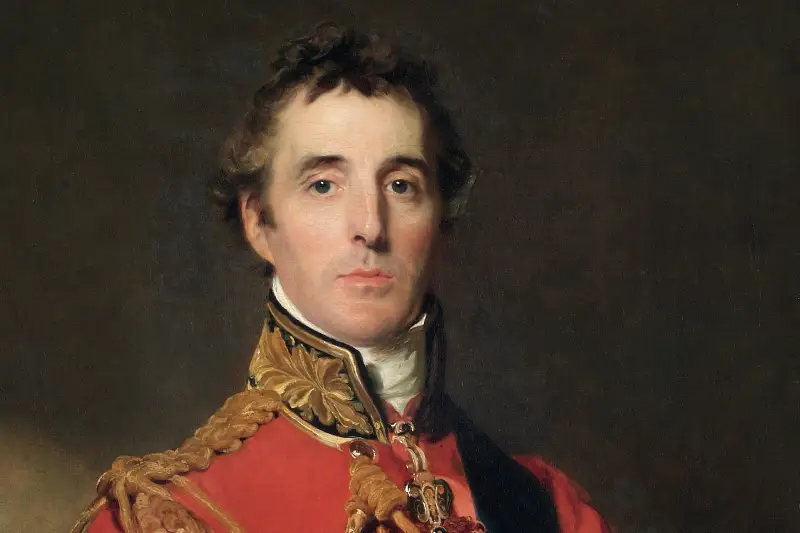
Arthur Wellesley
1st Duke of Wellington
Real Person (1769–1852)
Britain’s greatest general.
Defeated Napoleon’s armies in Spain, then crushed him at Waterloo in 1815.
Later served as Prime Minister of the United Kingdom.
Nicknamed “The Iron Duke” for his ice-cold discipline.
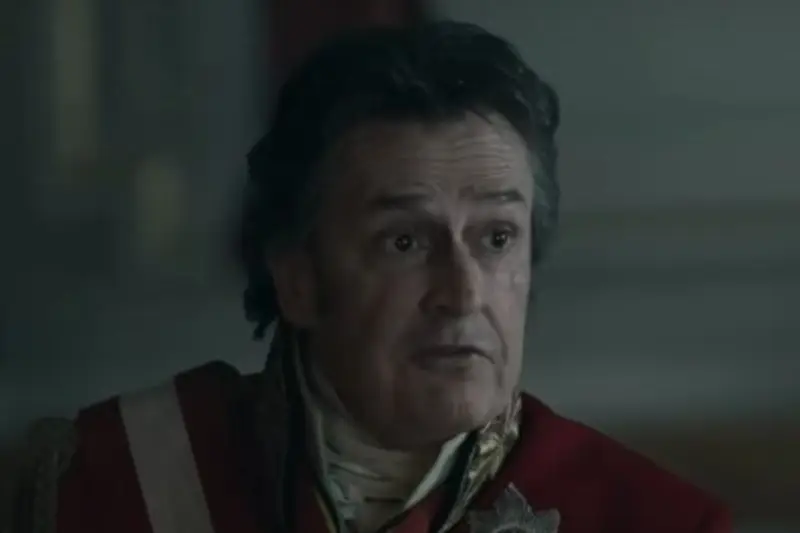
Rupert Everett
Actor (Duke of Wellington)
Only appears briefly at Waterloo, but absolutely nails the arrogant, sarcastic British aristocrat vibe.
His line delivery is pure class.
Napoleon (2023) – How Accurate Is the Film? (Historical Accuracy Analysis)
Ridley Scott’s Napoleon (2023) presents an epic retelling of Napoleon Bonaparte’s life, but rather than staying fully faithful to historical fact, it alters many elements for dramatic impact and visual spectacle. With a screenplay by David Scarpa, the film spans from the French Revolution to Waterloo, yet Scott’s approach is built on “entertainment, not a history lesson.” He even responded to criticism with “Were you there? No? Then shut up,” while Joaquin Phoenix noted, “If you want the real Napoleon, read a book; this is Ridley’s interpretation.”
The film keeps the broad outline of major events (such as the Siege of Toulon, the Egyptian Campaign, Austerlitz, and Waterloo), but mixes up chronology, simplifies characters, and invents several scenes. French historians accused the film of “insulting French history,” especially over absurd details like firing cannons at the pyramids. Even so, certain scenes (like the coronation) are portrayed accurately.
Fully Accurate Elements Consistent with Historical Records
- Coronation Ceremony (1804): Napoleon really did take the crown from the Pope’s hands and place it on his own head. This symbolic gesture of power is accurately shown in the film.
- Marriage and Divorce with Joséphine: Napoleon’s obsessive love for Joséphine, their 1796 marriage, and their 1810 divorce due to her inability to provide an heir are all historically accurate. Joséphine being a widow and older than Napoleon is also correct.
- Battle of Austerlitz (1805): Napoleon’s decisive victory over the Austrian–Russian armies and the famous “sun of Austerlitz” are true. The film’s emphasis on his strategic brilliance aligns with historical accounts.
- Battle of Waterloo (1815): Napoleon’s final defeat and Wellington’s victory are factual. While the visuals are exaggerated, the key factors (rain, Prussian reinforcements) are implied.
Altered or Dramatized Elements (Artistic License)
The film compresses timelines and reduces Napoleon into a caricature of a “soldier–mad lover.” Below are the most debated alterations:
- Egyptian Campaign and Firing at the Pyramids (1798–1799)
- Siege of Toulon (1793)
- 18 Brumaire Coup (1799)
- Death of Joséphine (1814)
- Napoleon’s Personality and Legacy
- Chronology and Compression
- End and Legacy
Reality: Napoleon conquered Egypt, but he never fired cannons at the pyramids—this was impossible due to the limited artillery range. He also brought 167 scholars for scientific and cultural research (including the discovery of the Rosetta Stone). The mummy-opening scene is fabricated; Napoleon had no such interest in mummies.
Film: Napoleon bombards the pyramids and smashes a mummy. → Completely fictional, added by Scott to emphasize a “strategic barbarian” image. Historians called it “ridiculous.”
Reality: Napoleon was 24 years old (the film portrays him closer to his 40s). This victory launched his career and showcased his artillery expertise.
Film: Exaggerates his age but preserves the significance of the victory. The chronology is compressed.
Reality: Napoleon seized power, but his brother Lucien played a major role. Napoleon was tense but calculated.
Film: Shows him rolling on the ground having a panic attack. → A dramatization that contradicts historical accounts.
Reality: Joséphine caught a fatal chill while preparing to host Tsar Alexander for tea. She had no plan to seduce him.
Film: Portrays her dying while attempting to form a romantic connection with the Tsar. → Fabricated for dramatic tension and to highlight Napoleon’s jealousy.
Reality: Napoleon shaped modern France through reforms such as the Napoleonic Code (still in use in 40+ countries). He abolished slavery in Egypt but reinstated it in Haiti. The “Napoleon complex” is a myth; he was of average height (1.69m).
Film: Omits his political reforms entirely, reducing the story to war and romance. His height is exaggerated, and an Oedipal relationship with his mother is implied (far from the truth).
Reality: Events span over 30 years with extremely complex alliances.
Film: Condenses battles and skips diplomatic context. This improves pacing but oversimplifies history.
Reality: Napoleon died in exile on Saint Helena (likely stomach cancer). His legacy remains divided between hero and tyrant.
Film: Death scene is accurate, but overall portrayal frames him as a “fool driven by ambition,” ignoring his reforms.
Overall Evaluation
Napoleon is more of a “visual spectacle” than a historical biography — the massive battle sequences (Austerlitz, Waterloo) are impressive, Joaquin Phoenix delivers an intense performance, and Vanessa Kirby’s Joséphine is captivating. However, its historical accuracy sits around 60–70%; Scott essentially completes Kubrick’s abandoned project with an “entertainment-first” approach. For history enthusiasts, it is “fun like Gladiator but nowhere near as accurate as 1917.” If you want to learn about the real Napoleon, read Andrew Roberts’ Napoleon: A Life or watch a proper documentary. The film doesn’t rewrite history, but it stands as an enjoyable interpretation — “Ridley’s Napoleon.”
Why Should You Watch It?
10 very strong reasons
- Ridley Scott’s biggest production ever
- Joaquin Phoenix in the second greatest role of his career
- Vanessa Kirby delivers an Oscar-worthy Joséphine
- The battle scenes set new standards for modern cinema
- Even people who hate history love it
- The music is phenomenal
- Costume and production design are Oscar-level
- This is the rawest “human” Napoleon ever portrayed
- Perfect if you enjoy debate
- Some films aren’t watched — they’re experienced
The most massive battle scenes since Gladiator. 6,000 extras, 300 horses, real cannons and muskets… Austerlitz and especially Waterloo are cinematic landmarks.
After Joker, another extreme, layered character. He carries Napoleon from age 26 to 52 on his own. His expressions, fury, and desperate pleas to Joséphine are simply hypnotic.
After her turn as Princess Margaret in The Crown, this is the peak of her career. A woman whose single glance can humble an emperor. The bedroom scenes and the divorce sequence are unforgettable.
Bigger than Dunkirk, more chaotic than 1917, more realistic than Gladiator. Cannon blasts, horses pounding, smoke, mud… If you don’t watch it in IMAX, you miss half the experience.
It’s 2 hours 38 minutes but flows effortlessly. Sharp dialogue, fast pacing, fiery romance. Not a history lesson — an epic mix of love and war.
Martin Phipps’s score + the climactic use of “La Marseillaise” produce genuine goosebumps.
A top contender in 2024 for Best Costume, Production Design, Sound, and Visual Effects.
Not on his throne, but begging Joséphine in bed, crying like a child in front of his mother. The heroic textbook image is completely dismantled.
The French were furious, historians exploded, Ridley Scott told everyone to “shut up”… It was discussed for weeks on social media. You feel compelled to watch it and form your own opinion.
Napoleon is one of those. It was the biggest cinematic event of 2023 and people are still talking about it.
Read More
Donnie Brasco
Donnie Brasco (1997) is a gripping crime drama directed by Mike Newell, based on a true story. With outstanding performances by Al Pacino and Johnny Depp, it remains one of the genre’s most iconic films.
Schindler's List
Schindler’s List (1993), directed by Steven Spielberg, is a monumental film that depicts the horrors of the Holocaust with raw emotional power. It remains one of the most important movies in cinema history.
Oppenheimer
Christopher Nolan’s 2023 film Oppenheimer tells the story of J. Robert Oppenheimer, the father of the atomic bomb. With multiple Oscar wins and nominations, it remains one of the most discussed films of recent years.
This website uses cookies to enhance your experience. By continuing to use this website, you agree to the use of cookies. For more information, please review our Privacy Policy.