Oppenheimer (2023) – The True Story of the Man Who Became Death
Movies
“Now I am become Death, the destroyer of worlds.” He built the most powerful weapon in history… then spent the rest of his life trying to destroy it. The true story of J. Robert Oppenheimer — Christopher Nolan’s 7-Oscar masterpiece.
Table of Contents
Plot of the Film
The goal is to build the world’s first atomic bomb.
The film lays bare both Oppenheimer’s scientific genius and the moral conflicts tearing him apart during this process. On July 16, 1945, the first nuclear test, codenamed “Trinity,” succeeds. Yet shortly afterward, the bombs dropped on Hiroshima and Nagasaki cause the deaths of hundreds of thousands of civilians.
After the war ends, Oppenheimer is forced to confront the horrific consequences of the weapon he created. During the Cold War, he becomes a target due to allegations of communist sympathies. In 1954, following a highly controversial security hearing, his clearance for access to classified information is revoked and his reputation is severely damaged.
Directed by Christopher Nolan, the film tells Oppenheimer’s life across three different timelines and color palettes:
- Color scenes: Oppenheimer’s point of view.
- Black-and-white scenes: The 1954 security hearing and the perspective of his rival, Lewis Strauss.
In short: The story of a genius who invents the most destructive weapon in human history while experiencing triumph, regret, guilt, and political persecution.
Real People and the Actors
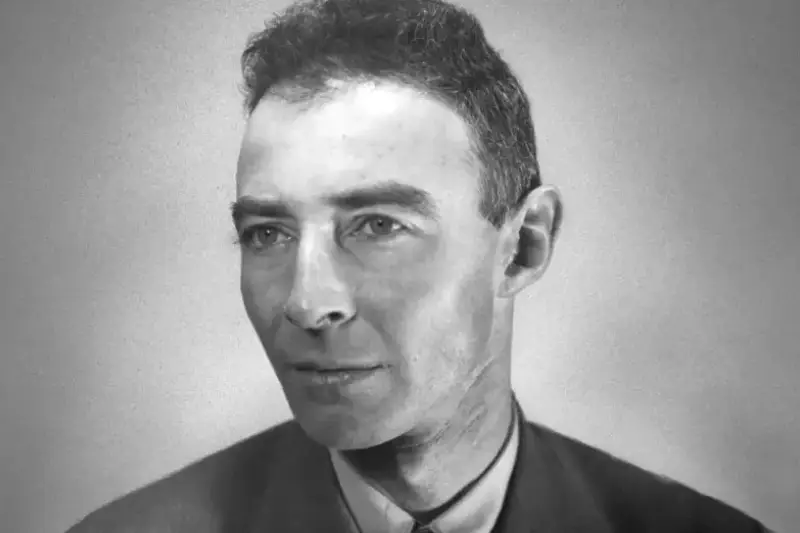
J. Robert Oppenheimer
Real Physicist (“Father of the Atomic Bomb”)
Scientific director of the Manhattan Project from 1942–1945.
Led the team that developed the world’s first atomic bomb at Los Alamos.
Famous quote after the “Trinity” test: “Now I am become Death, the destroyer of worlds” (from the Bhagavad Gita).
Book: American Prometheus (the film is adapted from this biography).

Cillian Murphy
Actor (J. Robert Oppenheimer)
Portrayed Oppenheimer in Christopher Nolan’s 2023 film.
Masterfully captured the character’s genius, guilt, and inner turmoil.
Lost extreme weight for the role, learned to smoke, and took physics lessons.
Won the Academy Award for Best Actor for this performance (2024).

Katherine “Kitty” Oppenheimer
Real Person (Oppenheimer’s Wife)
German-American biologist and botanist.
Married J. Robert Oppenheimer in 1940; they had two children.
Former member of the Communist Party and struggled with alcoholism.
During the Los Alamos years, she was her husband’s greatest emotional support while also battling depression and outbursts of anger.
Died of pancreatic cancer in 1972.

Emily Blunt
Actor (Katherine “Kitty” Oppenheimer)
Played Kitty in Christopher Nolan’s 2023 film Oppenheimer.
Powerfully portrayed her tough, intelligent, alcoholic, and emotionally fragile sides.
Her scene during the 1954 security hearing is unforgettable.
Won the Academy Award for Best Supporting Actress for this performance (2024).
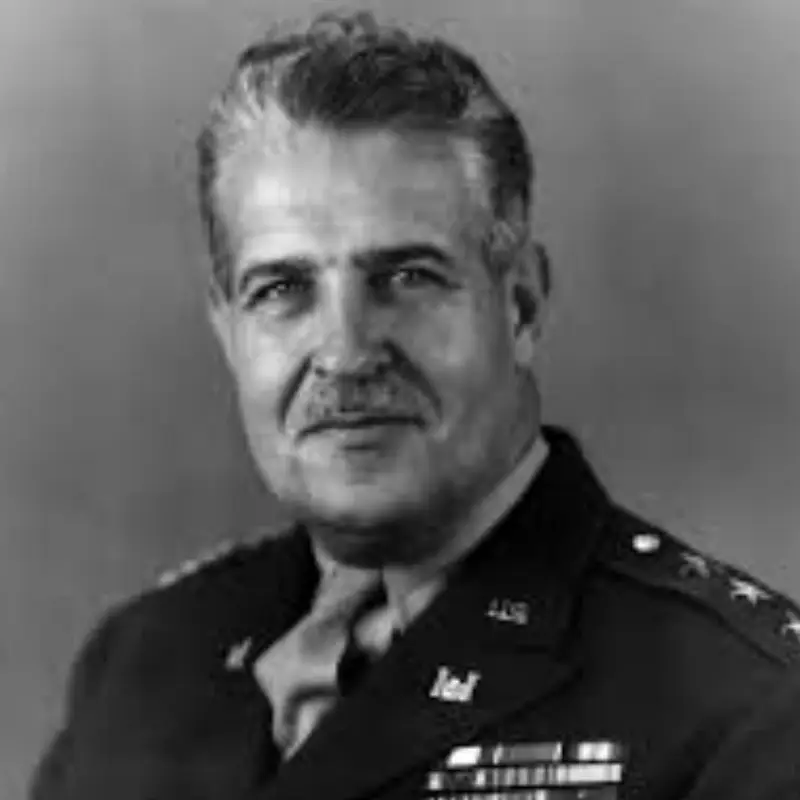
Leslie Richard Groves
Real Person (Military Director of the Manhattan Project)
U.S. Army Corps of Engineers general.
Military leader of the Manhattan Project from 1942–1947.
Ran the project with an iron fist, ensuring secrecy and speed.
Personally selected Oppenheimer as the scientific director.
After the war, he also oversaw the construction of the Pentagon.

Matt Damon
Actor (General Leslie R. Groves)
Played Groves in Christopher Nolan’s 2023 film Oppenheimer.
Perfectly captured the tough, pragmatic, witty, and somewhat gruff general.
The “reluctant partnership” scenes with Oppenheimer are among the most entertaining in the film.
Gained 30 pounds (13–14 kg) for the role and worked on his military bearing.
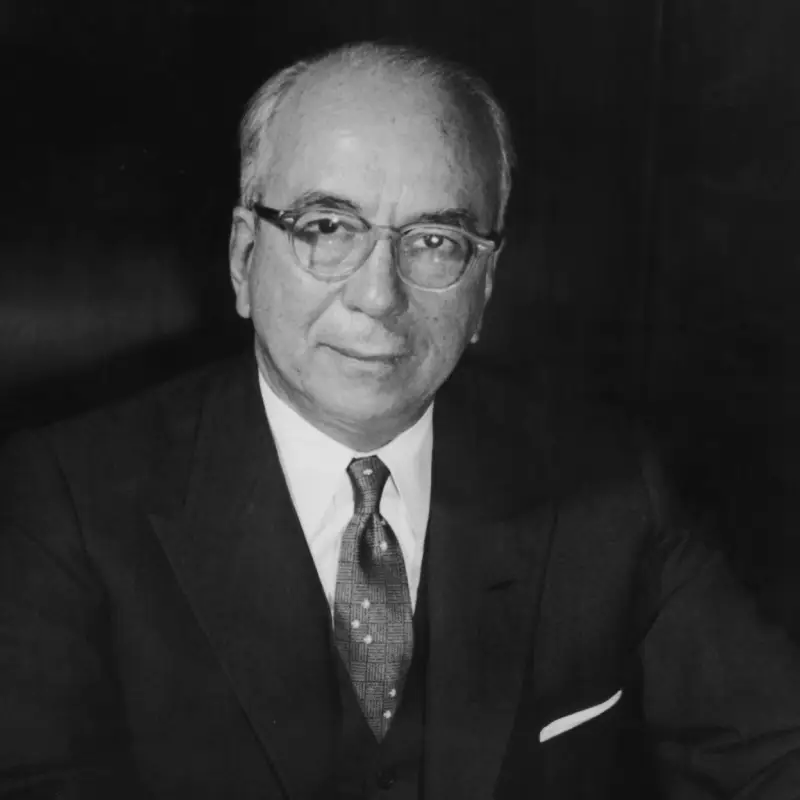
Lewis Lichtenstein Strauss
Real Person (Chairman of the U.S. Atomic Energy Commission)
American businessman and statesman who lived from 1896–1974.
Chairman of the Atomic Energy Commission (AEC) from 1953–1958.
Played a key role in the revocation of Oppenheimer’s security clearance.
Personally orchestrated the secret 1954 hearing.
Nominated by Eisenhower in 1959 for Secretary of Commerce, but rejected by the Senate.

Robert Downey Jr.
Actor (Rear Admiral Lewis Strauss)
Portrayed Lewis Strauss in Christopher Nolan’s 2023 film Oppenheimer.
Brilliantly played the cold, vengeful, and ambitious politician.
In the black-and-white scenes, he essentially acted as the film’s hidden narrator.
Won the Academy Award for Best Supporting Actor for this performance (2024) — his first Oscar!

Jean Frances Tatlock
Real Person (Psychiatrist • Oppenheimer’s Lover)
American psychiatrist and journalist who lived from 1914–1944.
Stanford Medical School graduate, specialized in child psychiatry.
Member of the Communist Party and wrote for The Western Worker.
Had a passionate and turbulent relationship with Oppenheimer from 1936–1939.
Found dead in her home in 1944 — officially ruled suicide (barbiturates + chloral hydrate), though conspiracy theories about her death are still debated.

Florence Pugh
Actor (Jean Tatlock)
Played Jean Tatlock in Christopher Nolan’s 2023 film Oppenheimer.
Delivered an unforgettable performance as the brilliant, rebellious, emotionally complex, and tragic character.
Her bedroom and psychiatry office scenes generated massive attention.
Earned Oscar and BAFTA nominations for Best Supporting Actress for the role.
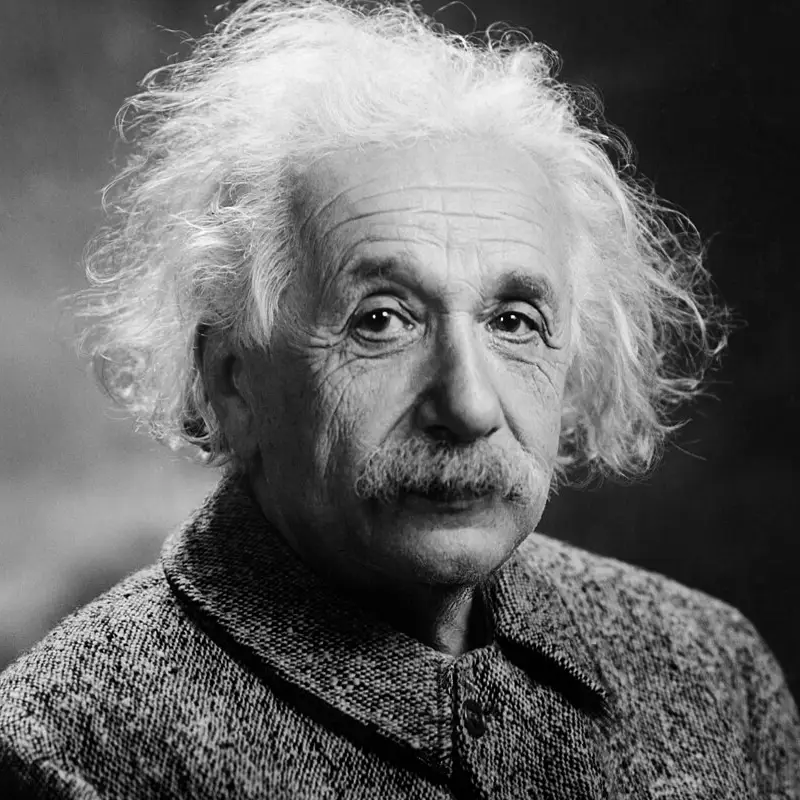
Albert Einstein
Real Person (Theoretical Physicist • Nobel Laureate)
Lived 1879–1955, the greatest scientist of the 20th century.
Revolutionized modern physics with the theory of relativity (E=mc²).
Fled Nazi Germany in 1933, settled in the U.S., and worked at Princeton.
Indirectly supported the Manhattan Project but vehemently opposed the use of the atomic bomb.
Was friends with Oppenheimer; never visited Los Alamos.
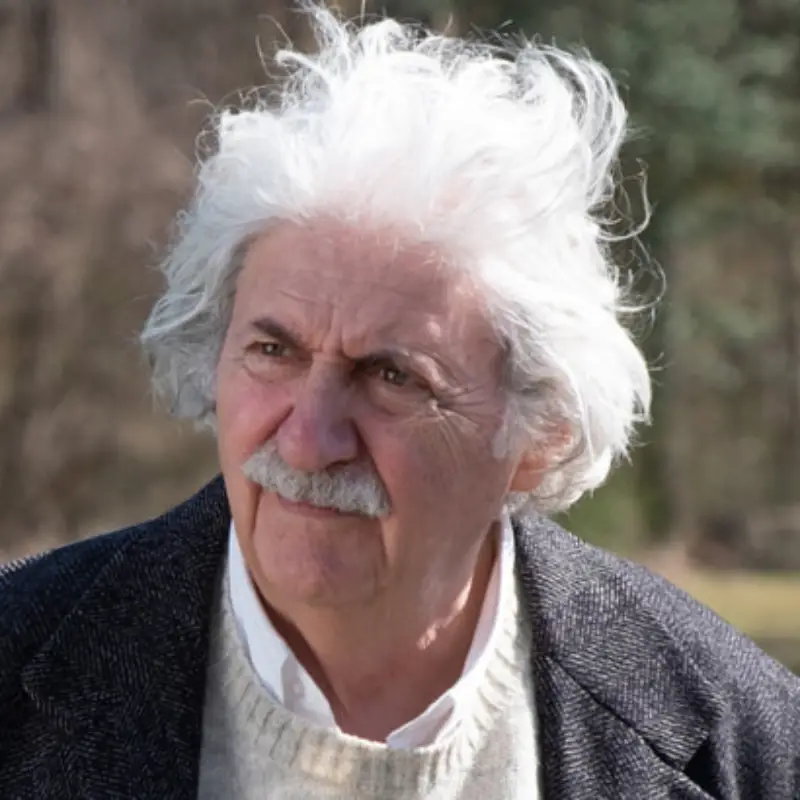
Tom Conti
Actor (Albert Einstein)
Played Einstein in Christopher Nolan’s 2023 film Oppenheimer.
Perfectly captured the wise, gentle, slow-speaking, and deeply conscientious elderly physicist.
The lakeside scenes and the line “the monster we have created” are unforgettable.
The 81-year-old Scottish actor looked almost exactly like Einstein with virtually no makeup!
The True Story of Oppenheimer
J. Robert Oppenheimer (1904–1967) was one of the most brilliant physicists of the 20th century. He graduated from Harvard in three years and worked alongside the founders of quantum mechanics in Göttingen and Leiden.
In 1942, the United States feared Germany might develop an atomic bomb first. General Leslie Groves selected Oppenheimer as the scientific director of the Manhattan Project.
Oppenheimer established a secret laboratory called Los Alamos in the New Mexico desert, employing over 130,000 people until 1945.
On the morning of July 16, 1945, the world’s first atomic bomb was detonated in the “Trinity” test. The explosion was so immense that Oppenheimer recalled a line from the Hindu scripture Bhagavad Gita: “Now I am become Death, the destroyer of worlds.”
August 6, 1945 – Hiroshima
August 9, 1945 – Nagasaki
More than 200,000 people lost their lives in total.
After the war, Oppenheimer was tormented by guilt and campaigned for international control of nuclear weapons. In 1954, amid Cold War paranoia, he was accused of communist sympathies, stripped of his security clearance, and his reputation was ruined.
In 1963, he was partially rehabilitated with the Enrico Fermi Award (announced by President Kennedy and presented by President Johnson after Kennedy’s assassination).
He died of throat cancer in 1967 at the age of 62.
Oppenheimer (2023) – How Faithful Is Nolan’s Film to Reality?
Christopher Nolan’s 2023 film Oppenheimer is based on Kai Bird and Martin J. Sherwin’s Pulitzer Prize-winning biography American Prometheus. While the film is more than 90% historically accurate overall, it contains Nolan’s signature non-linear timeline, dramatic intensification, and certain artistic interpretations. Here are the key comparisons:
Completely Accurate and Historically Exact Elements
- Trinity test (July 16, 1945): The explosion and Oppenheimer’s quote “Now I am become Death, the destroyer of worlds” are real.
- The establishment of the Manhattan Project and Los Alamos laboratory: Groves choosing Oppenheimer, security debates, and the gathering of scientists match historical records perfectly.
- 1954 Security Hearing: Lewis Strauss’s personal vendetta and the hearing transcripts are almost word-for-word accurate. Robert Downey Jr.’s portrayal of Strauss’s motive for revenge is true to history.
- Oppenheimer’s communist sympathies: His relationships with Jean Tatlock, his brother Frank, the Haakon Chevalier incident, and the FBI files are all factual.
- Guilt after Hiroshima and Nagasaki: Oppenheimer’s opposition to the hydrogen bomb and his calls for nuclear arms control are completely authentic.
Dramatized or Altered Elements
- Hiroshima and Nagasaki scenes
- Jean Tatlock’s death (1944)
- Timeline and use of color
- Minor character consolidations
- Oppenheimer’s family and private life
- Conclusion and rehabilitation
Reality: Oppenheimer learned about the bombings from the radio, did not join the celebrating scientists, and never experienced hallucinations of stepping on charred bodies or skin peeling off.
Film: In the auditorium where Oppenheimer gives his speech, hallucinatory visuals were added showing Japanese people’s skin melting and the sound of footsteps crushing flesh. → Purely Nolan’s artistic choice to visualize guilt.
Reality: Official report ruled suicide (drowning in the bathtub); some conspiracy theories exist, but Oppenheimer had no involvement.
Film: During the hearing scene, there is a brief hallucination of Oppenheimer holding Tatlock’s head underwater. → 100% fictional, added for shock value.
Reality: Events were not strictly linear, but not nearly as complex as Nolan made them.
Film: Color scenes (subjective – Oppenheimer’s perspective), black-and-white scenes (objective – Strauss’s perspective). Does not affect historical accuracy but enormously enriches the storytelling.
Several scientists and politicians were combined into single characters or had their names changed (e.g., William Borden’s letter is real but presented slightly differently in the film).
Kitty Oppenheimer’s alcoholism and depression are accurate. Her relationship with the children is portrayed as somewhat harsher than in reality.
Reality: Received the Enrico Fermi Award in 1963; in 2022 the Biden administration officially vacated the 1954 decision.
Film: The 2022 revocation is not included (filming had already wrapped by the time it happened).
Overall Verdict
Oppenheimer is one of the finest cinematic historical biographies ever made. The scientific details (even the quantum physics discussions), political atmosphere, and especially the 1954 hearing are extraordinarily accurate. Nolan’s added hallucinations and dramatic moments do not alter history — they simply visualize Oppenheimer’s inner turmoil.
Why Oppenheimer Is an Absolute Must-Watch – 10 Nuclear Reasons
- The Trinity test scene will make your soul leave your body
20 seconds of total silence followed by the loudest sound in cinema history.
- Cillian Murphy’s “I am become Death” moment is pure chills
You’ll never 100% get goosebumps.
- Robert Downey Jr.’s best performance since Chaplin
He deserved that Oscar 30 years in the making.
- The most star-studded cast in years
Every 10 minutes: “Wait… THAT actor is in this too?!”
- Sound design so good it won an Oscar
See it in IMAX or you’ve only seen 60% of the film.
- No explosions until minute 150… and you won’t even notice
3 hours of pure dialogue and tension — Nolan’s masterpiece.
- More relevant today than ever
McCarthyism, cancel culture, weaponized bureaucracy — it’s all here.
- The guilt scenes without showing Hiroshima/Nagasaki
You’ll feel the 200,000 deaths just from Cillian’s face.
- Even physicists say: “This is exactly how it happened”
Scientific accuracy level: nuclear.
- Because some movies aren’t watched — they detonate inside you
Oppenheimer is one of them.
More
Oppenheimer
The 2023 Christopher Nolan masterpiece Oppenheimer tells the life story of J. Robert Oppenheimer, the father of the atomic bomb. Nominated for 13 Oscars and winning 7, this legendary biographical film remains one of the most talked-about productions in the world.

Schindler's List
Schindler’s List, released in 1993, is a masterpiece etched in gold in cinema history. Directed by Steven Spielberg, this black-and-white drama is adapted from a true story and unflinchingly portrays the brutal reality of the Holocaust.

Ayla
A love that shines like moonlight in the dark nights of Korea… The miraculous father-daughter story of a Turkish soldier and an orphaned Korean girl whose bond blossomed amid the horrors of war and miraculously reunited after 60 years. A true epic. Real tears.